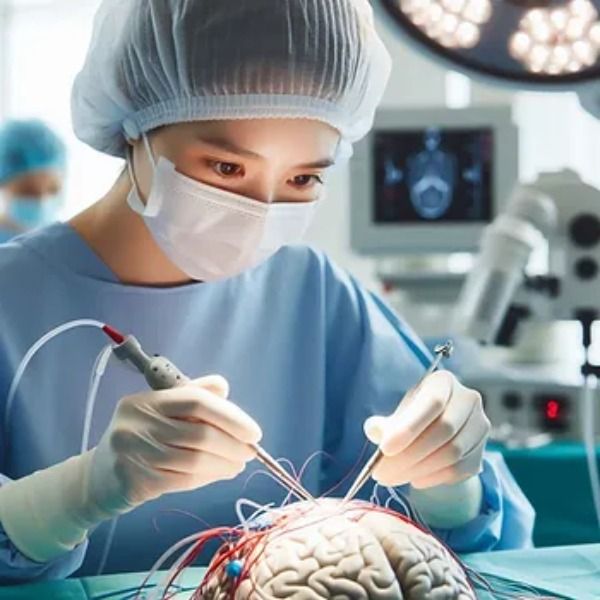
When doctors informed Vivek that he would require brain surgery, his first thought was not about the procedure itself.
His biggest fear was what life would look like afterward.
Would he be able to walk normally again? How long would recovery take? Would he depend on others for basic activities? Could he return to work and live independently like before?
Like many patients facing neurological treatment, Vivek feared that brain surgery would permanently change his daily life and mobility.
Even his family felt emotionally overwhelmed. They worried about long hospital stays, physical weakness, rehabilitation challenges, and uncertainty surrounding recovery outcomes.
Situations like this are extremely common today.
Many patients fear brain surgery not only because of the operation itself but because they worry about losing mobility, independence, confidence, and normal routine activities during recovery. Concerns about walking difficulties, balance problems, weakness, speech issues, and prolonged rehabilitation often create tremendous emotional stress for both patients and families.
While brain surgery is naturally a serious medical procedure, modern neurosurgery and rehabilitation-focused neurological care have evolved tremendously over recent years.
Today, recovery after brain surgery is far more structured, personalized, and supportive than many patients imagine.
One of the biggest misconceptions surrounding neurological surgery is the belief that recovery automatically means complete physical dependence or extremely long-term disability. In reality, recovery experiences vary greatly depending on the neurological condition, surgical complexity, patient health, early diagnosis, rehabilitation support, and treatment planning.
Many patients today successfully regain mobility, physical stability, confidence, and day-to-day independence through advanced neurological treatment combined with structured rehabilitation-focused recovery care.
Modern neurosurgery now focuses heavily on preserving neurological function while improving long-term quality of life.
Advanced technologies such as Neuro Navigation Systems, computer-assisted surgery, stereotactic procedures, high-definition surgical microscopes, and minimally invasive techniques are helping surgeons operate with far greater precision than before. These advancements often help reduce unnecessary tissue damage, support safer recovery outcomes, and improve long-term mobility possibilities for many patients.
At the same time, rehabilitation has become one of the most important parts of neurological recovery.
Recovery after brain surgery does not depend only on the procedure itself. Physiotherapy, neuro rehabilitation, mobility training, cognitive support, posture balance improvement, muscle strengthening, and emotional reassurance all play a major role in helping patients gradually regain physical confidence and independence.
This recovery process often begins much earlier than patients expect.
Many individuals today start carefully guided rehabilitation soon after stabilization, depending on their condition and neurological recovery progress. Early rehabilitation often helps improve balance, coordination, walking ability, muscle control, flexibility, confidence, and overall recovery quality.
One of the biggest emotional challenges patients face after brain surgery is fear about reduced mobility and dependence on family members.
Even temporary weakness or movement limitations may affect emotional well-being significantly. Patients frequently worry about becoming physically dependent or losing the ability to perform everyday activities comfortably.
Effective neurological care therefore focuses not only on surgery but also on helping patients gradually rebuild confidence and independence during recovery.
At PHALKE NEURO, patients receive advanced neurological and brain-spine care supported by modern neurosurgical technology, rehabilitation-focused recovery planning, and patient-centered treatment approaches designed according to each patient’s neurological condition and long-term mobility goals.
The hospital offers advanced neurological facilities including Neuro Navigation Systems, ZEISS Neurosurgical Microscope technology, CUSA technology for tumor removal, stereotactic surgery, computer-assisted brain and spine surgery, Advanced Neuro ICU support, and rehabilitation-focused neurological care focused on improving patient safety, mobility recovery, and long-term quality of life outcomes.
For many patients, emotional reassurance becomes just as important as physical treatment during recovery.
Brain surgery often creates fear about future independence, work life, family responsibilities, and emotional stability. Families also experience tremendous stress while supporting loved ones through neurological recovery.
This is why recovery-focused neurological care now emphasizes communication, rehabilitation support, patient confidence, mobility planning, and emotional well-being alongside medical treatment.
At PHALKE NEURO Hospital, treatment approaches are carefully designed according to each patient’s neurological condition, recovery progress, emotional well-being, mobility challenges, rehabilitation needs, and long-term quality of life goals.
Dr. Umesh Phalke, Senior Neurosurgeon with more than 25 years of experience, specializes in advanced brain surgery, neuro trauma care, spine surgery, and complex neurosurgical procedures focused on improving patient outcomes while protecting long-term neurological function and mobility.
The hospital’s rehabilitation and physiotherapy support systems also help patients gradually regain movement confidence, coordination, physical stability, posture balance, emotional reassurance, and day-to-day independence during the healing process.
Modern neurological recovery is no longer focused only on survival or symptom management alone.
Patients today increasingly seek treatment approaches that support smoother recovery, better mobility outcomes, improved independence, emotional stability, and long-term quality of life after surgery. Advanced rehabilitation-focused neurological care is helping many individuals return to work, family life, social activities, and everyday routines more confidently than before.
Ignoring neurological treatment because of fear surrounding long recovery periods may sometimes allow the underlying condition itself to become more dangerous over time.
Untreated neurological disorders can gradually affect mobility, memory, coordination, speech, emotional health, concentration, physical independence, and overall quality of life significantly. Many patients later realize that delaying treatment due to fear only increased the complexity of their condition and recovery.
This is why brain surgery and neurological treatment should never be viewed only through fear surrounding recovery difficulties.
Modern neurological care today focuses heavily on precision treatment, rehabilitation-focused recovery, mobility improvement, emotional reassurance, and long-term patient independence.
Protecting neurological health early often improves both treatment possibilities and recovery outcomes significantly.
Conclusion
Still worrying about long recovery periods after brain surgery is completely understandable for many patients and families, especially when concerns about mobility, independence, and daily routine activities create emotional stress and uncertainty. However, modern neurosurgery and rehabilitation-focused neurological care are now helping many patients recover more comfortably while improving long-term mobility, confidence, and quality of life outcomes.
At PHALKE NEURO, patients receive advanced brain and neurological care supported by modern neurosurgical technology, rehabilitation-focused treatment planning, physiotherapy support, and compassionate patient-centered neurological care focused on improving recovery confidence, mobility, and long-term independence.
Dr. Umesh Phalke
Senior Neurosurgeon
MBBS, MS (General Surgery), MCh (Neurosurgery), FBNI (USA)
PHALKE NEURO Hospital
Kundan Nagar, Kasarwadi, Pimpri-Chinchwad, Pune, Maharashtra 411012
Website: Phalke Neuro Official Website
Phone Number: +91 88888 5577 | 020 6733 3666
Email: umeshphalkens@gmail.com
Practice Hours: Mon to Sat – 10:00 AM to 9:00 PM
Recent Posts
-
 Ignoring Lower Back Pain That Travels to the Legs While Herniated Disc Problems Continue Progressing
 -
 Struggling with Chronic Spine Pain Despite Medication While the Root Cause Continues Remaining Untreated
 -
 . Why Long Sitting Hours and Sedentary Work Culture Are Increasing Slipped Disc Problems in Young Professionals
 -
 Ignoring Neck Pain and Tingling in the Hands While Nerve Compression Symptoms Continue Progressing
 -
 Still Living with Constant Back Pain While Underlying Spine Problems Continue Worsening Over Time