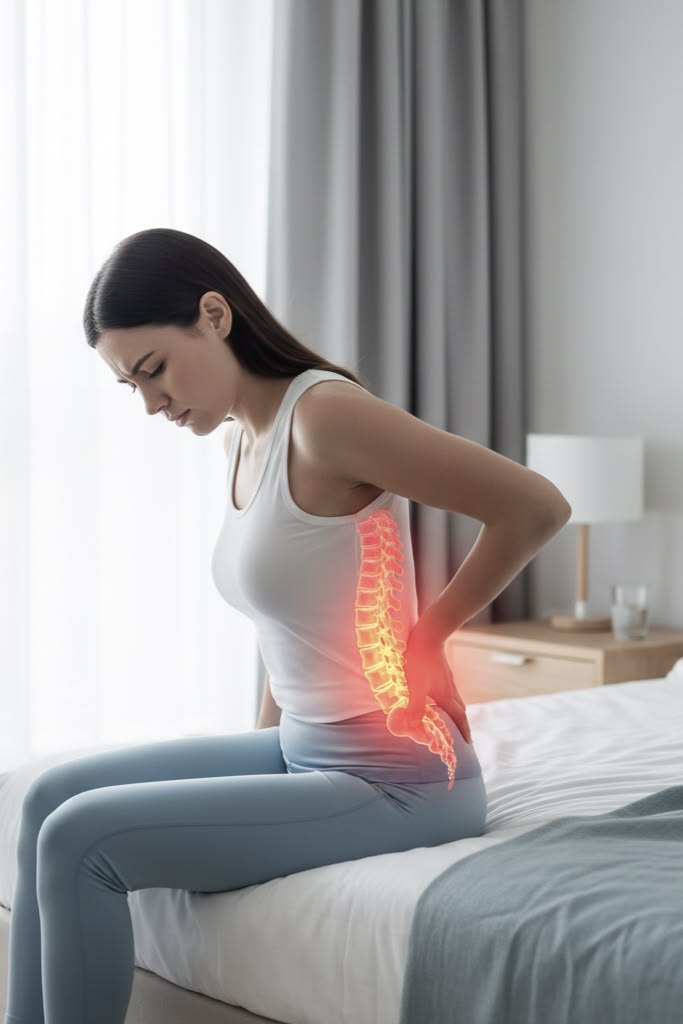
For months, Ajay believed the pain in his lower back would eventually disappear on its own.
It started as mild discomfort after long office hours. Sitting for extended periods made his back feel stiff, but once he rested for a while, the pain reduced temporarily. Gradually, however, the discomfort started traveling down one leg. Some mornings, he felt tingling sensations near his foot. On other days, even walking short distances became physically exhausting.
Still, he ignored it.
Like many people today, Ajay assumed the pain was caused by stress, posture problems, or physical fatigue. Painkillers and home remedies provided temporary relief, which convinced him that the problem was not serious.
But over time, the symptoms slowly became more intense.
Driving became uncomfortable, sitting for meetings felt unbearable, and even sleeping peacefully started affecting his daily routine. Eventually, when numbness and weakness in his leg began interfering with normal movement, neurological and spine evaluation revealed a herniated disc that had been silently worsening for a long time.
Situations like this are becoming increasingly common today.
Many people continue ignoring lower back pain that spreads into the legs because the symptoms often develop gradually during the early stages. Unfortunately, pain radiating from the lower back into the legs may sometimes indicate a herniated disc or nerve compression that continues progressing silently when proper treatment gets delayed.
The spine contains soft discs positioned between the vertebrae that help absorb pressure and support smooth body movement. When one of these discs becomes damaged or slips out of place, it may start compressing nearby nerves. This condition is commonly known as a herniated disc or slipped disc.
Once nerves become compressed, symptoms may gradually spread beyond the lower back into the hips, legs, feet, or surrounding muscles.
One of the biggest challenges with herniated disc problems is that symptoms often appear slowly enough for patients to normalize them.
Many individuals continue functioning normally while nerve compression silently worsens underneath. Temporary relief from medication, massage therapy, or rest frequently creates the impression that the condition is improving, even when the spinal damage continues progressing over time.
Modern lifestyles are also contributing heavily to rising slipped disc and spine-related problems across different age groups.
Long sitting hours, poor posture, physically demanding routines, obesity, lack of exercise, improper lifting habits, stressful work schedules, excessive screen exposure, and sedentary lifestyles are placing increasing pressure on the lower spine. Even younger adults today are increasingly experiencing herniated disc problems because of unhealthy posture habits and reduced physical movement.
At the same time, many individuals continue delaying proper spine evaluation because they assume lower back pain is “normal” or temporary.
Certain symptoms should never be repeatedly ignored, especially when they continue worsening over time. Persistent lower back pain, pain radiating into the legs, tingling sensations, numbness, burning sensations, muscle weakness, difficulty walking, stiffness, posture imbalance, or reduced leg strength may sometimes indicate nerve compression and herniated disc problems requiring specialized spine care.
In many situations, patients later realize that the pain they ignored for months was actually an early warning sign of progressive spinal nerve damage.
This is why early diagnosis becomes extremely important.
When herniated disc conditions are identified earlier, specialists often have more treatment possibilities available, including physiotherapy, rehabilitation-focused care, posture correction, minimally invasive procedures, medication management, nerve decompression techniques, and advanced spine surgery when necessary.
Delayed treatment, however, may gradually worsen nerve compression, chronic pain, mobility limitations, muscle weakness, posture imbalance, and long-term spinal health.
In more serious situations, untreated herniated disc conditions may eventually affect walking ability, physical independence, work productivity, sleep quality, and overall quality of life significantly.
Modern spine care and neurosurgery have evolved tremendously over recent years, allowing specialists to diagnose and treat herniated disc conditions with far greater precision than before. Advanced imaging systems, neuro navigation technology, minimally invasive spine surgery, computer-assisted procedures, and rehabilitation-focused recovery planning now help improve treatment safety, recovery comfort, and long-term mobility outcomes.
Depending on the condition, treatment may involve medication management, physiotherapy, rehabilitation programs, posture correction strategies, minimally invasive spine procedures, slipped disc treatment, nerve decompression surgery, or advanced spine surgery focused on protecting nerve function and improving patient mobility.
At PHALKE NEURO, patients receive specialized brain and spine care supported by advanced neurosurgical technology, precision diagnosis systems, rehabilitation-focused recovery planning, and patient-centered treatment approaches designed according to each patient’s spinal condition and recovery needs.
The hospital offers advanced spine and neurological facilities including Neuro Navigation Systems, computer-assisted brain and spine surgery, Advanced Neuro ICU support, minimally invasive treatment approaches, rehabilitation-focused physiotherapy care, and precision-guided surgical technology designed to improve both treatment safety and long-term recovery outcomes.
Recovery from herniated disc problems often affects emotional well-being as much as physical comfort.
Many individuals dealing with chronic lower back pain experience frustration, anxiety, sleep disturbances, emotional stress, reduced confidence, and fear about worsening mobility or physical dependence in the future. Even simple activities such as sitting comfortably, walking, driving, exercising, or working productively may gradually become physically and mentally exhausting.
Effective spine care therefore focuses not only on temporary pain reduction but also on long-term mobility improvement, nerve protection, rehabilitation support, posture correction, physical stability, and quality of life enhancement.
At PHALKE NEURO Hospital, treatment approaches are carefully designed according to the patient’s spinal condition, mobility limitations, recovery progress, lifestyle factors, emotional well-being, and long-term spinal health goals.
Dr. Umesh Phalke, Senior Neurosurgeon with more than 25 years of experience, specializes in advanced spine surgery, brain surgery, neuro trauma care, and complex neurosurgical procedures focused on improving patient recovery outcomes and protecting long-term neurological and spinal health.
The hospital’s rehabilitation and physiotherapy support systems also help patients gradually regain movement confidence, posture balance, flexibility, physical stability, and day-to-day independence during the recovery process.
Ignoring lower back pain that travels into the legs may eventually affect far more than temporary comfort alone.
Untreated herniated disc conditions can gradually impact mobility, concentration, sleep quality, emotional health, physical independence, work efficiency, posture balance, and overall quality of life over time. Many patients later realize that the symptoms they normalized for years were actually warning signs of progressive spinal problems requiring timely treatment.
This is why lower back pain associated with leg pain, numbness, or weakness should never be repeatedly ignored without proper neurological and spine evaluation.
Protecting spinal health early often improves both recovery possibilities and long-term mobility outcomes.
Conclusion
Ignoring lower back pain that travels to the legs may allow herniated disc problems and nerve compression to continue worsening silently over time. Symptoms such as tingling sensations, numbness, weakness, stiffness, or radiating leg pain should never be repeatedly ignored without proper neurological and spine evaluation.
Modern spine care now focuses heavily on early diagnosis, precision treatment, minimally invasive approaches, rehabilitation-focused recovery, and long-term mobility protection designed around each patient’s spinal condition and recovery needs.
At PHALKE NEURO, patients receive advanced spine and neurological care supported by modern neurosurgical technology, rehabilitation-focused treatment, and compassionate patient-centered care focused on improving long-term mobility and quality of life.
Dr. Umesh Phalke
Senior Neurosurgeon
MBBS, MS (General Surgery), MCh (Neurosurgery), FBNI (USA)
PHALKE NEURO Hospital
Kundan Nagar, Kasarwadi, Pimpri-Chinchwad, Pune, Maharashtra 411012
Website: Phalke Neuro Official Website
Phone Number: +91 88888 5577 | 020 6733 3666
Email: umeshphalkens@gmail.com
Practice Hours: Mon to Sat – 10:00 AM to 9:00 PM
Recent Posts
-
 Ignoring Lower Back Pain That Travels to the Legs While Herniated Disc Problems Continue Progressing
 -
 Struggling with Chronic Spine Pain Despite Medication While the Root Cause Continues Remaining Untreated
 -
 . Why Long Sitting Hours and Sedentary Work Culture Are Increasing Slipped Disc Problems in Young Professionals
 -
 Ignoring Neck Pain and Tingling in the Hands While Nerve Compression Symptoms Continue Progressing
 -
 Still Living with Constant Back Pain While Underlying Spine Problems Continue Worsening Over Time